
On March 13, 2025, the Klamath Drainage District (KDD) hosted the second annual Lower Klamath Renaissance Tour, which was sponsored in part by the HAF+WRCF Klamath River Fund. The event brought together farmers, Tribal representatives, conservationists, and government officials to explore collaborative efforts aimed at restoring Upper Klamath Basin wetlands and improving water management. KRF staff braved snow flurries and cold weather to take part and learn more about local efforts to revitalize a region challenged by water scarcity and ecological degradation.
Reimagining Water Management Through Collaboration

The tour showcased KDD’s “Replumbing the Klamath” project, a plan designed to reconnect Lower Klamath Lake with the Klamath River. By modifying existing canal systems to more closely mimic historical conditions, the project aims to facilitate fish passage, supply water to the Lower Klamath National Wildlife Refuge and support agricultural sustainability. This nature-based solution addresses the pressing issues of drought and desertification that have plagued the region in recent years, particularly the drying of Lower Klamath National Wildlife Refuge in 2021, which severely impacted migratory waterfowl and endangered fish species. Events like this give us a chance to showcase the importance of maintaining wetlands, the progress made restoring habitat, and to get new ideas for future projects.
A Journey Through Restoration Efforts
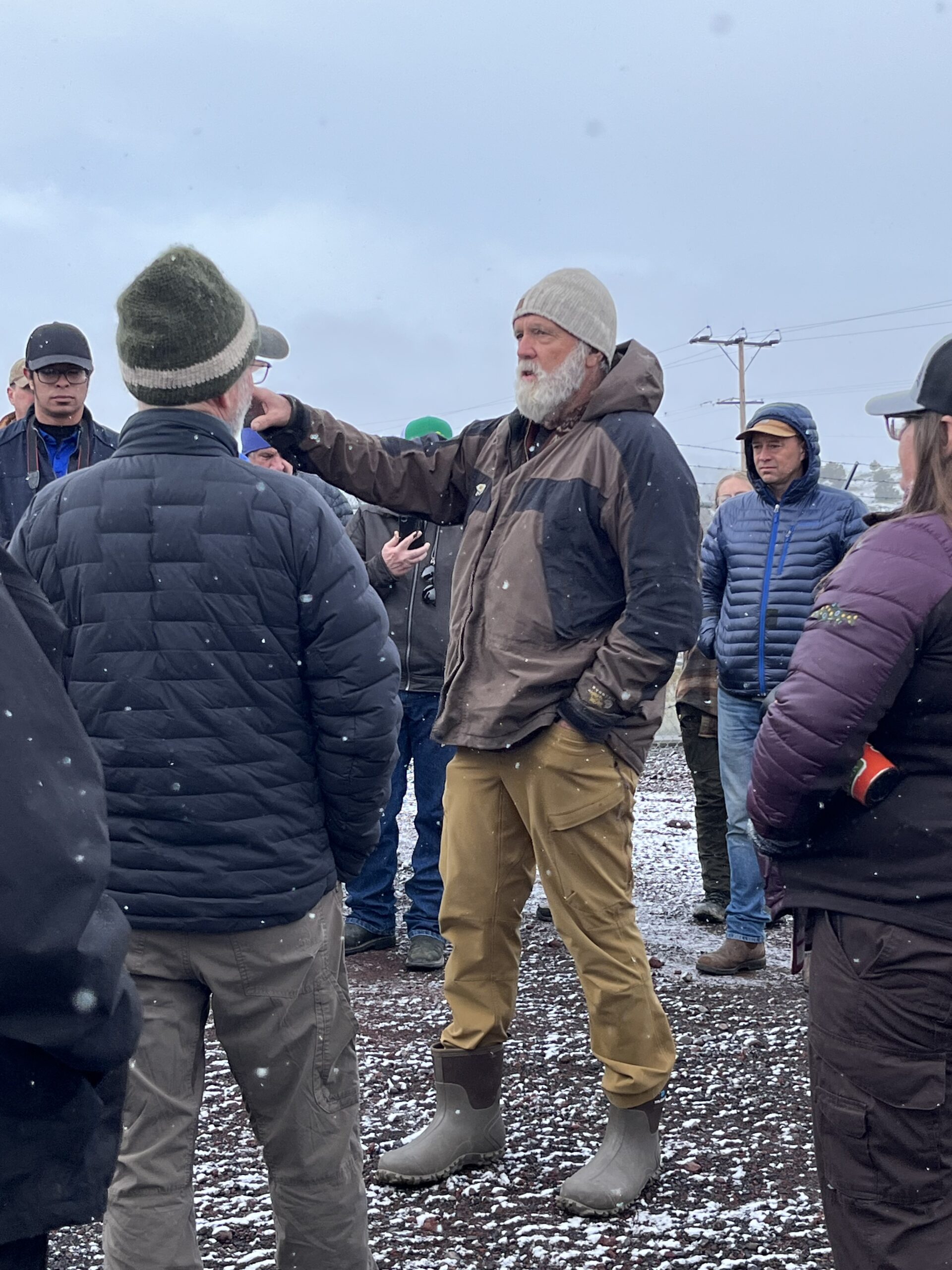
We were treated to a driving tour of Klamath Drainage District’s service area, beginning with a visit to the Straits Drain Pumping Plant, followed by stops at the Ady Canal Refuge Delivery Site and Modoc Farm. These sites showcase the integration of agricultural practices with ecological restoration.
At Liskey Farms, attendees dined on buffalo burgers provided by the Modoc Nation while discussing ideas for collaboration. The tour included birdwatching in KDD-managed areas, highlighting the resurgence of wildlife in restored habitats. According to KDD General Manager Scott White, “It’s really a great event to build relationships and find ways to collaborate with Tribal and community partners.”
Lakeside Farms owner Karl Wenner describes changes to the landscape during the March Renaissance Tour. Photo by Craig Tucker.
Building a Coalition for Change
The success of the Replumbing the Klamath project and other similar efforts hinges on the collaboration of diverse stakeholders, including the Modoc Nation, Ducks Unlimited, the Klamath Tribes, the Yurok Tribe, the U.S. Fish and Wildlife Service, private landowners and various state and federal agencies. This coalition reflects a unified approach to water management that honors Tribal sovereignty, supports the agricultural community, and prioritizes ecological recovery.
It’s really a great event to build relationships and find ways to collaborate with Tribal and community partners.”
Scott White, Klamath Drainage District General Manager
Looking Ahead: A Model for Sustainable Coexistence
The Lower Klamath Renaissance Tour is a great example of how grassroots outreach and education can spur dialogue and collaboration between diverse stakeholders. While dam removal dramatically advanced restoration of salmon and other migratory fish species, Upper Basin wetlands are in dire need of restoration efforts of a similar scale. The Upper Basin is a critical piece of the Pacific Flyway, offering forage and nesting habitat for millions of waterfowl. The wetlands also host critically endangered koptu and c’wam, two species of critically endangered suckerfish that are culturally important to Klamath and Modoc People. Events like the Renaissance Tour create opportunities for dialogue and serve as an incubator for ideas to address these pressing challenges.